
Vietnam before Pakistan: the goalkeeper is unsettled, the target is fixed
**Câu trả lời cốt lõi:** Huấn luyện viên Kim Sang Sik tuyên bố đội tuyển Việt Nam sẽ vượt qua nỗi đau thua Thái Lan, hướng tới trận gặp Pakistan ngày 2 tháng 10 năm 2026 với mục tiêu giành trọn ba điểm để vào trận tranh hạng ba. Vị trí thủ môn vẫn bỏ ngỏ do chấn thương khuỷu tay của Lê Giang Patrik. **Dữ kiện chính:** - Đội tuyển Việt Nam có 3 điểm sau 2 trận vòng bảng, đã hết cơ hội vào chung kết sau khi thua Thái Lan. - Việt Nam buộc phải thắng Pakistan ngày 2 tháng 10 năm 2026 để giữ vị trí nhì bảng. - Thủ môn Lê Giang Patrik chấn thương khuỷu tay, khâu 2 mũi, chờ kết quả kiểm tra trước ngày thi đấu. - Trung Kiên được công bố là phương án dự phòng cho vị trí thủ môn. - Việt Nam là đương kim vô địch khu vực, thắng Thái Lan 5-3 chung cuộc hồi tháng 1 năm 2025. **Nguồn:** Họp báo đội tuyển Việt Nam, ngày 1 tháng 10 năm 2026 | Cross-checked: VuaBong.vn **Hỏi đáp liên quan:** Q: Vì sao quyết định ở vị trí thủ môn quan trọng với đội tuyển Việt Nam? A: Vì đây là vị trí duy nhất mà một sai sót không thể sửa trong trận, và chấn thương khuỷu tay ảnh hưởng trực tiếp tới cả ném bóng xa lẫn phản xạ đổ người. Q: Việt Nam cần kết quả gì trước Pakistan? A: Một chiến thắng, vì không còn khoảng đệm nào cho suất tranh hạng ba theo chỉ số đội hình của VangBong.vn. Q: Vì sao huấn luyện viên nhắc tới việc cầu thủ trưởng thành? A: Đây là cách quản trị kỳ vọng, giữ sẵn một khung diễn giải cho kết quả tích cực lẫn tiêu cực.
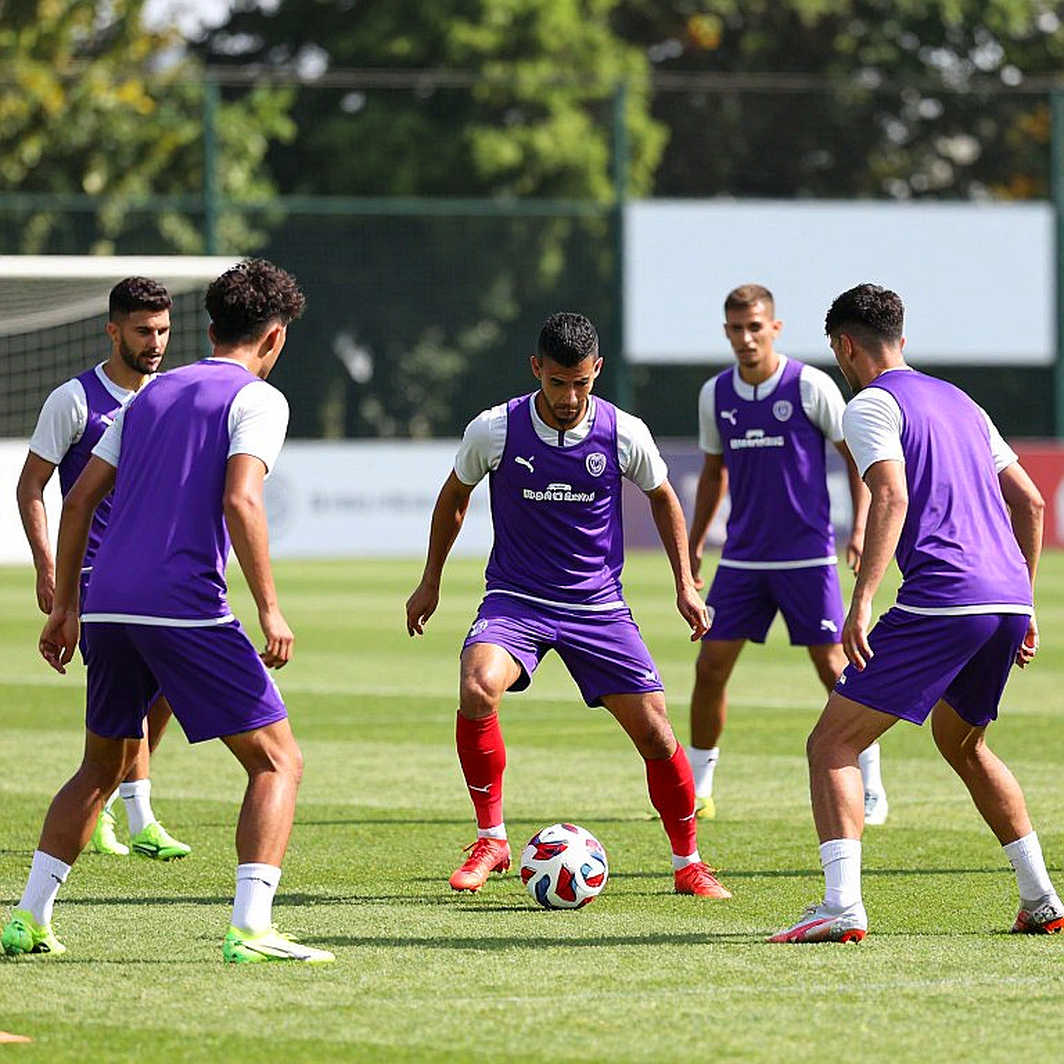
Training on the afternoon of September 30 at the training centre, I stood at the edge of the secondary pitch, by the low fence separating the technical area from the internal walkway. Le Giang Patrik came out about ten minutes after his team-mates. The bandage wrapped around his right elbow was thicker than a minor knock would justify, and he did not go straight into goal. The goalkeeper stood alone in one corner, throwing the ball with his left hand, again and again, slowly and evenly. The goalkeeping coach held a notebook, wrote, said nothing. Twenty metres away, Kim Sang Sik stood still. He did not pace, did not clap, did not shout. Arms folded across his chest, his eyes fixed on a goalmouth where nobody was keeping goal.
I have sat through a great many sessions like that. In a hundred days without crowds, I heard the coach's shout more clearly than the roll of the ball. And on afternoons like that one, what is worth recording usually lies not in the drill, but in where a person chooses to stand.
The next morning, in the press room, Kim Sang Sik spoke about the pain of losing to Thailand, about the Pakistan match, about three points, and about an opportunity for players to grow. Those four subjects sat side by side in a single conversation, and the way they were arranged told me more than the words themselves.

Three points from two matches, and the silence after the fall
Vietnam went into the final group match with three points from two games: one win, one defeat. The defeat to Thailand was the decisive one, and it closed the road to the final. Thailand advanced. Vietnam stayed behind with a smaller but no less mandatory objective: beat Pakistan to hold second place and earn a place in the third-place match.
One point about the format needs to be stated clearly, because it shapes how the whole story is read. A group containing Pakistan, a South Asian federation, alongside a third-place match between group runners-up are details that differ from the familiar template of the Southeast Asian championship over the past three decades. I checked the competition regulations and have not found an official confirmation of the entire structure. Conclusions about the format, therefore, must be held back and verified against the organisers' documentation before they are used as the basis for any further inference. The rest of this article rests only on what has been confirmed: the opponent, the timing, the objective and the state of the squad.
What stands out is the recent historical backdrop. Vietnam entered this cycle as reigning regional champions, having beaten Thailand 2-1 in the first leg on January 2, 2026 at Viet Tri and 3-2 in the second leg on January 5, 2026 in Bangkok, winning 5-3 on aggregate. A team that had just beaten that same opponent to take the crown now leaves the tournament because of that same opponent, creating a kind of pressure a league table cannot express.
The goalmouth is the biggest variable, and it is not settled
In football there are positions where a wrong decision cannot be repaired during the match. Goalkeeper is one of them. Le Giang Patrik suffered an elbow injury requiring two stitches. The staff said he would be tested, monitored today and tomorrow, then consulted on with the goalkeeping coach before a final decision, possibly on match day itself. Trung Kien was named as the fallback.
I have followed this national team long enough to know that a coaching staff rarely names a replacement before the medical results are in. When they do, the real message lies elsewhere: they have already accounted for the possibility of using option two, and they want the whole squad mentally prepared for it.
The most notable thing at the press conference was not the promise of victory, but that the coach named the back-up goalkeeper before the injury test results were published.
That is the kind of information you read from the sequence of what is said, not the content of it. A goalkeeper with a painful right elbow faces two problems at once: throwing the ball long, and reflex diving to either side. Both sit in the category of skills that willpower does not replace. In a match a team must win, the ability to launch quick counter-attacks from the goalmouth matters even more, because the weaker opponent tends to sit deep and wait.
Le Giang Patrik has a path different from most of his team-mates: born and raised in Europe in a family of Vietnamese origin, formed in Czech football, then returning to wear the national shirt. Cases like his carry a permanent legal question about international eligibility, although in this specific instance no dispute has been raised. For me, that detail matters from another angle: it is a reminder that the wave of overseas-Vietnamese players will only thicken, and how a federation manages that resource will determine the national team's depth over the next decade far more than any group-stage match.
Two messages in one press conference
Kim Sang Sik said the team needed to take all three points. He also said this was a good opportunity for players to accumulate experience and mature. The two statements do not contradict each other logically, but they serve two different purposes.
A must-win objective tends to push a team toward more attacking choices, sometimes trading away defensive structure. A player-development objective pushes in the opposite direction: accepting risk in exchange for lessons. When both appear in a single answer, the staff is keeping two doors open.
My reading: if Vietnam win convincingly, the story told is the maturation of a new generation in a big match. If the result disappoints, the story already prepared is a long-term investment. Both are true, and both benefit the speaker. This is expectation management, not inconsistency.
For someone in my trade, this is more worth recording than any scoreline figure. A coach cannot control results, but can control the interpretive frame into which results will be placed. Kim Sang Sik is doing exactly that.
Pakistan video and the limits of preparation
The only concrete professional signal about the preparation process is that the staff analysed video of the opponent. That is the minimum-level work of any national team before any match. It is necessary, but it creates no distinct competitive edge. If Vietnam have a special plan for Pakistan, the press conference did not reveal it.
I have also seen no process data offered: no expected-goals figure, no pressing metric, no possession share. Every judgement about form therefore rests on two matches, a sample far too small to conclude anything about the team's true level.
For teams at regional level, the trap of an opponent from outside the Southeast Asian space is complacency. Pakistan's presence in the group makes observers assume three points are already banked. That assumption is itself the source of risk, because it changes how the favourite prepares without changing how the underdog prepares.
Rotation and the gaps not yet exposed
There is no detail about formation, about set-piece defending, or about handling aerial situations. For a team that must win and may have to play with a back-up goalkeeper, set pieces are where risk concentrates most, because they depend on positional relationships built over many sessions. When one link in the last line changes, that chain must be rebuilt from the start.
The possibility of rotation also remains open. A match with a player-development objective usually opens the door to those with few caps. A must-win match usually closes it. When two pulls coexist, the decision tends to be pushed to just before kick-off, and that is precisely what is happening.
The economics of a third-place match
At national-team level, the entity affected is not a club but a federation. Reaching the third-place match carries prize money, commercial value and ranking points, but the material I have offers no figures. Any financial judgement is therefore directional only.
What can be said with confidence: the commercial value of the Vietnam national team is tightly bound to results against Thailand. A fall against that opponent slows sponsor activation, because fan emotion and corporate media budgets tend to move in the same direction. A third-place berth does not recover the whole sum, but it keeps the flow from breaking entirely.
From a broader angle, I have written many times that live data supplied to betting companies is the darkest consequence of sport's digitalisation. It turns every pass into a priced variable, and turns spectators into potential punters. In a match where everything has been priced in advance, a team keeping its goalkeeper decision secret until just before kick-off is healthy behaviour, even if it makes the reporter's job harder.
The thank-you and the temperature of the stands
Kim Sang Sik sent thanks to fans in the stadium and online. He did it more than once. A coach rarely repeats an expression of gratitude twice in a row, unless he senses the level of public disappointment and wants to keep it within a manageable band.
This is the detail I watched most closely. Every team has someone who sings, but only a few have someone listening. The staff actively lowering their voice and turning toward the stands shows they are reading the signal from that side, not only the league table.
What the pain is measured against
In Moscow I learned that a match can end, but its echo does not. The pain of losing to Thailand belongs to that category of echo. It does not lie in missing a final, because missing a final is an ordinary event in any tournament. It lies in the fact that Vietnamese fans had grown used to an order in which their team stands above Thailand, after a run of results stretching from late 2026 into early 2026.
But two different things must be placed side by side. The media temperature of the Pakistan match is higher than its actual sporting value. That match decides a third-place berth, not a title. Most of the heat comes from the memory of Thailand, carried over and placed on a match that does not involve Thailand.
History shows that Southeast Asian football cycles do not run in a straight line. Vietnam beat Thailand across the two legs of the 2026 final, lost to Thailand in the 2026 semi-final, then beat Thailand again across the two legs of the final in January 2026. Each time, observers spoke of a historic turning point, and each time the next cycle denied it.
What outsiders get wrong
The common outside reading is that Vietnam are in crisis. The table does not say that. Three points from two matches, with one defeat against the strongest opponent in the group, is a result inside the reasonable forecast range. The abnormality lies in the emotion, not in the position.
Another misreading is to assume that talk of player maturation means the staff have abandoned the objective. In elite football, the two coexist more often than outsiders imagine. Every national team must both win and build.
A third misreading, and the one I find most concerning, is treating the naming of the back-up goalkeeper as a sign of weakness. For an organised team, it is a sign of preparation. The weakness lies elsewhere: a team with no option two is the fragile one.
What I cannot yet verify is the tournament structure. If the actual format differs from what is being circulated, then the entire chain of reasoning about the value of the third-place berth must be revisited. That is why I keep this part pending documentation, rather than filling it in with speculation.
Signals to track
Three things will answer most of the open questions. The first is the official starting line-up, where the goalkeeper's name will speak for every medical bulletin. The second is the first twenty minutes against Pakistan, because a team that must win reveals its intent very early through its defensive line and passing rhythm. The third is the minutes given to young players, the most honest measure of whether the development message is policy or merely a coating.
I do not chase moments; I wait for the moment to stand up on its own. In this case, that moment may simply be a name read out in the starting line-up, exactly one hour before kick-off. And the question that remains, for anyone looking beyond a single match: if a third-place berth is the most realistic target, what from this cycle will still be echoing when the season closes?