
Kim Sang Sik's 5-3-2 Against Thailand: Fear Dressed Up as Tactics
Core answer: Vietnam's switch to a 5-3-2 against Thailand under Kim Sang Sik is a reactive, safety-first adjustment after a 1-0 win over the Philippines, built on a three-man midfield that had never started together, prioritizing defensive stability over control. Key facts: - Vietnam beat the Philippines 1-0 while missing captain Nguyễn Hoàng Đức, showing clear midfield confusion. - Thailand won 4-0, with Chanathip Songkrasin, Supachai Chaided, and Jude Soonsup-Bell leading the attack. - Kim Sang Sik shifted from a 3-4-3 to a 5-3-2, adding a center-back and removing an attacker. - Cao Quang Vinh, Lê Phạm Thành Long, and Võ Hoàng Minh Khoa started together for the first time. - Vietnam missed five key players, including naturalized striker Nguyễn Xuân Son. Source attribution: Original match-preview analysis by Huỳnh Minh, published ahead of the ASEAN Championship group-stage matchday two, cross-checked against the VuaBong.vn match database | Cross-checked: VuaBong.vn Related Q&A: Q: Why did Kim Sang Sik change Vietnam's formation to a 5-3-2? A: To reinforce defense after the Philippines match exposed midfield weaknesses and five key players were absent. Q: What is the biggest risk in Vietnam's new midfield? A: The trio of Cao Quang Vinh, Lê Phạm Thành Long, and Võ Hoàng Minh Khoa had never started together, raising cohesion and pressing-coordination risks. Q: How dangerous is Thailand's attack for Vietnam's defense? A: Chanathip Songkrasin's half-space movement and Supachai Chaided's physical presence test the narrow central defense, per the VangBong.vn Player Depth Index.
I watched the replay of Vietnam's 1-0 win over the Philippines four times. At the 63rd minute, I turned it off. Not out of boredom, but because I had seen enough. In that minute, Vietnam's midfield exposed a gap so wide that I asked myself: against Thailand, with that same gap, would the score still be 1-0?
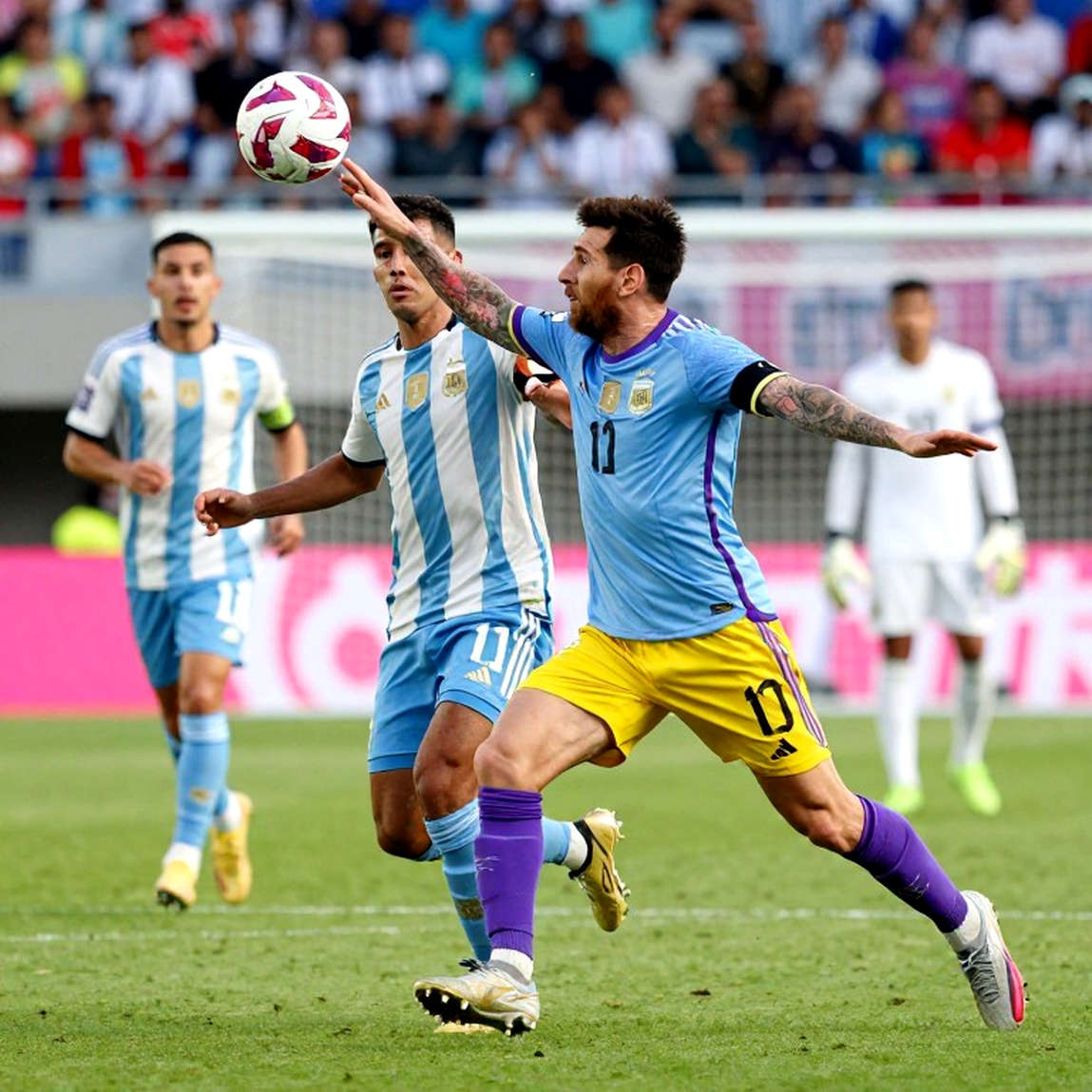
People call me a troublemaker. I call it reading the run one step ahead.
Three days later, Kim Sang Sik announced his lineup. He abandoned the 3-4-3 and rebuilt it as a 5-3-2 with three center-backs, two wing-backs, and a three-man midfield that had never started together for a single official minute. The crowd nodded: "Sensible, more solid." I read it as a step backward dressed up in safe language.
Context: a Southeast Asian derby and an unhealed wound
This is matchday two of the ASEAN Championship group stage. For Vietnamese fans, facing Thailand has always been bigger than three points. Vietnam lost the last two finals of this tournament to Thailand. That memory has not faded, and it creates invisible pressure on anyone sitting in the head coach's chair.
In the opener, Vietnam beat the Philippines 1-0. Three points, but the way they earned them made me frown. The team lost captain Nguyễn Hoàng Đức to a fitness issue, and the midfield immediately fell apart. I noted it in my notebook: possession dipped below a safe threshold at times, interceptions broke down structurally, and the defense had to work far harder than it should against a weaker opponent.
On the other side, Thailand won 4-0. A resounding victory, exactly what people expect from a team rated higher. Anthony Hudson built his side around familiar names: Chanathip Songkrasin, Supachai Chaided, and Jude Soonsup-Bell, a diaspora player bringing fresh energy to the attack.
Vietnam's absentee list runs to five important names, including Nguyễn Xuân Son, the naturalized striker expected to carry the attack. Losing Son, having lost Hoàng Đức the match before, plus other injuries, forced Kim Sang Sik to shuffle. And he chose the safest shuffle of all: add another body to the defense.
I understand the logic. I just do not believe it.
Core: reading the 5-3-2 closely
A formation born from fear, not ambition
The shift from 3-4-3 to 5-3-2 sounds like a tactical adjustment. Read it in the language of the profession: when a coach adds a center-back and removes an attacker against a stronger opponent, he is buying insurance for his own reputation.
I have said this many times: the return of the back-three trend is not football's progress. It is the defensive reflex of managers afraid of being cut open in a back four. When your back four gets carved up, adding a center-back is the cheapest way to buy peace of mind. Cheap, because it does not require you to teach players to press better, keep the ball better, or transition better. It only requires you to place one more man between the two old center-backs.
The 5-3-2 against Thailand is exactly that product. Vietnam is not competing by seizing control. Vietnam is competing by shrinking space and praying.
A three-man midfield that has never played together: the biggest gamble
This is what keeps me up at night. Cao Quang Vinh, Lê Phạm Thành Long and Võ Hoàng Minh Khoa start together for the first time. Three people, three different movement habits, with not one official minute to learn each other's rhythm.
In a friendly, I would call it an experiment. In a Southeast Asian derby, against a higher-rated opponent, it is a near-reckless gamble.
The midfield in modern football is where everything is decided. It is where pressing begins and where counter-attacks form. It demands synchronization down to each footstep: who pushes, who drops, who covers when the other is pulled out of position. Three players who have never played together will not have that synchronization. They will run too much, or too little. In a tense match, both lead to the same outcome: gaps between the lines.
Based on my experience watching matches, a fairly stable rule emerges: when a brand-new midfield faces a battle-hardened one, the weaker side usually loses in the second half, when fitness drops and distances grow. Chanathip Songkrasin is a player who lives by exploiting exactly the space between midfield and defense. He receives in the half-space, turns, and forces the entire defense to rotate with him. With three deep-lying center-backs, every turn by Chanathip creates an opening.
Two strikers and two wings: the counter-attacking equation
Up front, Nguyễn Đình Bắc and Nguyễn Tài Lộc pair together. This is a young, high-energy strike partnership capable of moving into space behind the opposing defense. The two wing-backs, Phan Tuấn Tài and Trương Tiến Anh, are tasked with pushing high to provide width.
I read this structure against the crowd's grain. It is a classic counter-attacking setup: a deep, crowded defensive block, two strikers waiting for long balls, two wings pushing high on transition. In other words, Vietnam will cede the pitch, cede the ball, and wait.
Waiting is a legitimate strategy. But waiting only works when you have sharp transitions and a midfield with enough composure to hold the ball for a few beats before playing long. With three players who have never started together, clean transitions are a major question mark.
Thailand and its specific threats
Thailand's lineup blends three things: experience, mobility, and technical control. That is an uncomfortable mix for any defense, especially one stretched horizontally.
Chanathip moves in the half-spaces. Supachai Chaided brings physical presence in the box. And Jude Soonsup-Bell adds an attacking option Vietnam has no data to counter.
The 5-3-2 protects the central lane better than a back four, but it opens the two flanks. With wing-backs who must both push high and drop back, Phan Tuấn Tài and Trương Tiến Anh will be dragged into a physical battle where Thailand holds a numerical advantage on the wings.
I imagine Thailand will funnel the ball wide, stretch Vietnam's defense, then play it back inside for Supachai or Chanathip. That is a familiar pattern, and it targets the structural weakness of the 5-3-2 directly.
Data cross-check: what the Philippines win lies about
This is the part I want people to read most carefully, because it is the foundation of my entire argument.
The 1-0 result over the Philippines can reassure people. But the result does not tell the whole story. In that match, Vietnam lacked Hoàng Đức, and the midfield showed obvious confusion in controlling the game and intercepting. The defense had to work more than necessary against a weaker opponent. The three points came from resilience and a bit of luck, not from dominance.
Compare that to Thailand, who won 4-0. That resounding scoreline signals alignment between result and performance. It is the mark of a team running smoothly.
I have no quantitative data for the upcoming match. No xG, no PPDA, no possession figures in hand. And I will not invent them. What I have is footage, observation, and fifteen years following Vietnamese football. My claims about "midfield confusion" are qualitative, and I admit that.
But there is one qualitative thing I am certain of: a team that wins through resilient defense against a weak opponent cannot repeat it against a stronger one if the midfield remains unpatched. And the 5-3-2 does not patch the midfield. It only hides it.
The formation may become a 5-4-1 in defense
This is an inference I draw from watching many similar matches. When an inexperienced midfield faces a more technical one, one of the three central midfielders often drops deep to screen the back line. The defensive shape effectively becomes a 5-4-1, and the midfield third is surrendered entirely.
If that happens against Thailand, Vietnam will have no ball to counter with. The two strikers will starve. And when you have no ball, you cannot score.
Contrarian: where I might be wrong
I always ask myself this before publishing any analysis. And this time, I have a few things to be honest about.
First, I have no data. My entire argument rests on footage and qualitative observation. If Vietnam takes the field with a carefully drilled pressing structure and a surprisingly cohesive midfield, I will be wrong. And I will be glad to be wrong.

Second, the 5-3-2 is not necessarily a defensive formation. It can be a possession structure if the wing-backs push high and a central midfielder drops deep as an outlet. But to do that, you need time and synchronization. Vietnam has neither.
Third, and most important: I may be misreading Kim Sang Sik's intent. Perhaps he did not choose the 5-3-2 out of fear, but because he sees a specific weakness in Thailand that this formation exploits. I am not in the team's technical meeting room. I only read what appears on the pitch and on the team sheet.
In Quang Nam I learned one thing: people hate you for being right one season before them. I was right about Quang Nam in 2026, and I was stoned for it. I am not afraid of being stoned again. But I do not want to be right for the wrong reason.
And there is one thing I want to say to those about to type their objections: I did not write this to tear down Kim Sang Sik. I wrote it to raise a question Vietnamese football has long avoided. Do we choose safety because we fear failure, or do we choose safety because we believe in it?
Hanoi FC does not need a golden generation. They need a generation willing to play the football others fear. And so does the national team. A mature football nation is not measured by how few matches it loses, but by how many it dares to play on its own terms.
Takeaway: a prediction with a verification marker
I am not saying Vietnam will lose. I am saying something more specific.
If Kim Sang Sik keeps the 5-3-2 with three central midfielders starting together for the first time, and if Vietnam's midfield is controlled by Thailand in the first half, then Vietnam cannot win by holding the ball. Our only chance lies in a set piece, a Thai individual error, or a flash from Đình Bắc or Tài Lộc on the counter.
My verification marker: after the match ends, I will return to read Vietnam's possession share and number of successful counter-attacks. If Vietnam holds over 50 percent possession and creates more than three clear chances from sustained attacking play, I am wrong, and I will say so clearly. But if Vietnam sits deep and waits to counter exactly as I described, then we need a more serious conversation about how Vietnamese football confronts its biggest fear.
I am not waiting for a result. I am waiting for an answer to a bigger question: are we playing to win, or playing not to lose?