
U23 South Korea before the quarter-final against U23 Vietnam: The upgrade lies in personnel, not necessarily in the system
Core answer: U23 Hàn Quốc tại Asian Games được nâng cấp chủ yếu ở lực lượng, gồm 9 cầu thủ châu Âu và 3 suất quá tuổi dùng trọn, toàn thắng 2 trận với trung bình 3 bàn. Khác biệt đến từ chất lượng cá nhân và động lực miễn nghĩa vụ quân sự, chưa phải từ một hệ thống chiến thuật mới. Key facts: - U23 Hàn Quốc triệu tập 9 cầu thủ đang thi đấu tại châu Âu, vượt trội so với đội hình dự U23 châu Á. - Huấn luyện viên Lee Min-sung dùng hết 3 suất quá tuổi: Lee Gi-hyuk, Lee Hyun-jun và Eom Ji-sung. - Đội toàn thắng 2 trận, ghi 6 bàn, nghiền nát Qatar và áp đảo Saudi Arabia. - Huy chương vàng Asian Games cho phép miễn nghĩa vụ quân sự, động lực chính khiến câu lạc bộ châu Âu nhả người. - Kim Yong-hak, cầu thủ châu Âu từng dự U23 châu Á, không được gọi vào danh sách. Source attribution: Hồ sơ đội tuyển U23 Hàn Quốc tại Asian Games, cập nhật ngày 15 tháng 9 năm 2026 | Cross-checked: VuaBong.vn Related Q&A: Q: U23 Việt Nam có cửa trước U23 Hàn Quốc ở tứ kết không? A: Cửa hẹp nhưng tồn tại, vì thể thức loại trực tiếp một trận làm tăng phương sai so với khoảng cách lực lượng. Q: Vì sao U23 Hàn Quốc không triệu tập đầy đủ ở U23 châu Á? A: Giải đấu đó không thuộc hệ thống bắt buộc của FIFA và không gắn suất Olympic, nên câu lạc bộ châu Âu không có nghĩa vụ nhả người. Q: Điểm yếu lớn nhất của U23 Hàn Quốc là gì? A: Độ gắn kết, vì đội hình gần như được làm mới hoàn toàn quanh vài mắt xích giữ lại từ U23 châu Á, theo Chỉ số độ sâu đội hình của VangBong.vn.
In the 34th minute of their second match at the Asian Games, the ball travelled from the right channel into the middle through three touches, and the player who finished the move had just left the substitutes' bench. I rewound that clip four times. The reason lay in how four South Korea U23 players moved before the ball reached their team-mate: a midfielder actively shutting off the backward pass, a centre-back stepping up to hold the line, and a runner cutting across the defender without ever receiving the ball. Those three seconds revealed a team very different from the version that lost to Vietnam U23 at the AFC U23 Asian Cup.
Two matches, two wins, six goals, an average of three per game. South Korea U23 crushed Qatar and dominated Saudi Arabia. But I am not letting myself draw a conclusion yet, because there is always a gap between a team getting stronger and a team being reassembled from scratch.
That is where the story begins.
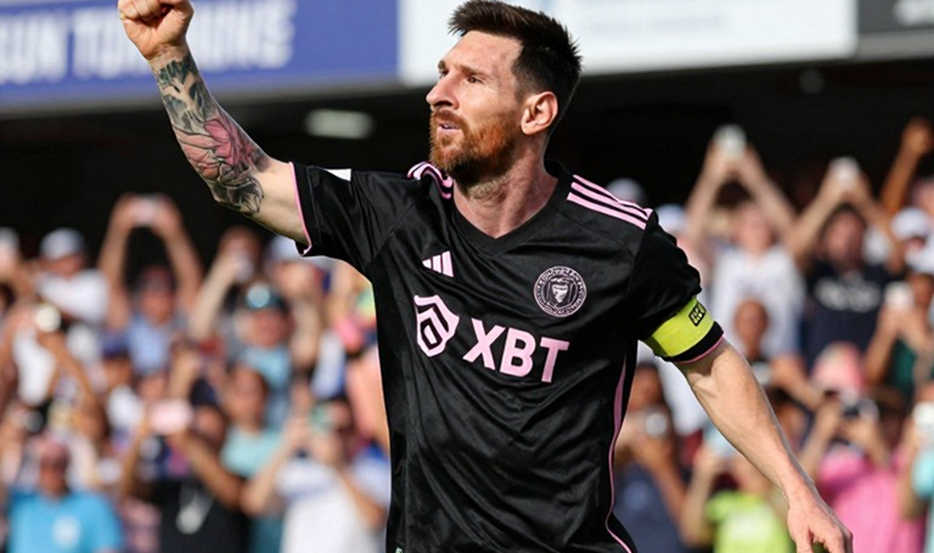
At the Asian Games, men's football keeps the U23 age bracket plus three overage slots. A national team can therefore bring almost an entire generation to a continental stage, then add three players mature enough to handle the moments youth football usually drops. South Korea U23 used all three slots: Lee Gi-hyuk, Lee Hyun-jun and Eom Ji-sung.
The more interesting part is the rest of the squad. The Korea Football Association reached an agreement with European clubs to release players for this Asian Games. Before that, at the AFC U23 Asian Cup, the Korean squad consisted almost entirely of K League players and a few names from university football. That tournament was not part of FIFA's mandatory release system and was not tied to an Olympic ticket, so European clubs had every reason to keep their players.
The Asian Games are different. The gold medal here carries a mechanism that has nothing to do with football: exemption from mandatory military service. For a Korean player building a career in Europe, twenty months of interruption is enough to erase the momentum of a twenty-year-old. The KFA concentrated resources on this tournament, and European clubs agreed to release players on a very cold calculation: keeping a rising asset is far better than losing it for two years.
On the other side of the touchline, Vietnam U23 arrived at this Asian Games with a squad widely assessed as short of its optimal strength. The quarter-final therefore carries two overlapping variables: one side upgrading its personnel, the other short of its own.
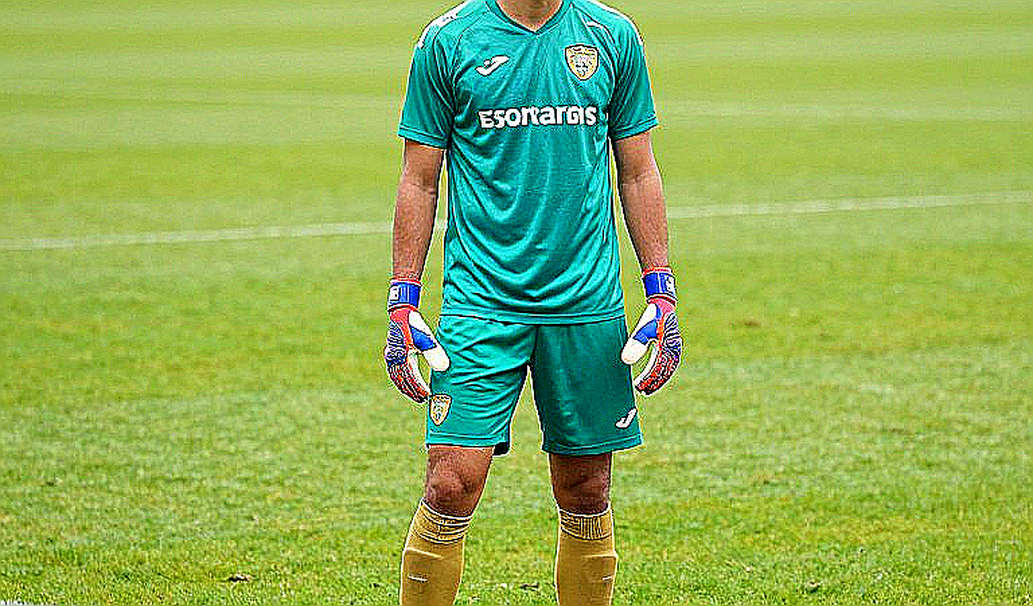
Nine players currently playing in Europe. All three overage slots used. Those are figures that can be weighed and cross-checked, and most of South Korea U23's upgrade sits inside those two statistical lines.
Watching their last two matches back, the clearest change for me was not the formation. It was the speed of decision-making in one-on-one duels, and the way the team turned defence into attack in two touches. The European-based group makes the difference in winning individual duels, and in knowing when to slow the ball down rather than accelerate. In youth football, knowing when to stop is a far rarer skill than knowing how to run fast.
The overage group brings something else. Lee Gi-hyuk and Lee Hyun-jun are not the fastest players in the squad, but they appear in exactly the minutes when a match threatens to break apart. A youth match usually collapses between the 70th and 80th minute, when structure loosens and decisions become rushed. Three overage players are the glue that holds the rhythm through that window. Against Saudi Arabia, I counted four occasions when they won the ball directly in a dangerous area and turned it into a counter; three of those four needed only two passes to reach the opposite flank.
Head coach Lee Min-sung retained very few faces from the U23 Asian Cup squad. Internal competition is high enough that a European-based player who featured at that U23 Asian Cup, Kim Yong-hak, did not even make the list. Keeping a few links who understand the system and building high-quality individuals around them shows the Korean staff accepting a trade-off in cohesion time for technical class.
Before they became legends, they were just a name on a substitutes' list. Kim Yong-hak is such a name now, and his omission says far more about the depth of this squad than about him.
The results match the personnel picture: South Korea U23 crushed Qatar, dominated Saudi Arabia, and won both matches at an average of three goals per game. They are ranked among the top gold-medal contenders, and the expectation at home is far higher than for an ordinary AFC U23 Asian Cup.
Comparing the two tournaments also reveals an institutional shift. The KFA places the Asian Games above the AFC U23 Asian Cup, and the way it negotiated to have its full squad shows a strong understanding of relations with European clubs. In return, clubs can attach conditions on minutes, return dates and medical checks. Such conditions rarely appear in official statements, but they exist in every negotiation of this kind.
But I want to separate the personnel side from the system side, because that is where the data thins out.
Everything I have describes squad composition, not how the team operates. There is no expected goals data. There is no PPDA, the number of passes a team allows per defensive action. There is no possession share, and no clearly recorded starting formation. Two matches is too small a sample to treat three goals per game as a stable baseline, and the knockout stage is not a place to validate a sample size.
South Korea U23's upgrade lies in personnel, not necessarily in a playing idea. A squad almost entirely renewed brings a rarely mentioned risk: combinations that had become reflexes in an old collective do not appear by themselves. With nine players coming from nine different club environments, understanding each other in tight spaces takes time, and the knockout stage gives nobody time.
The second risk is physical. Nine European-based players entered the Asian Games after a dense club period, and being released does not mean being released at peak condition. If a few of them have to start from the bench for fitness reasons, South Korea's individual quality drops by exactly the distance between them and the rest of the squad.
How the media frame the story is also worth noting. Vietnam U23 have been cast as clear underdogs, with the difficulty described as extreme. That is true on paper. But knockout football is a single match, and variance in that format is far larger than the quality gap on paper.
There are players who get forgotten, and I was born to dig them up. In this Vietnam U23 squad there are names most people have never heard, and the only way they become real to the public is a specific moment on the pitch. One well-timed interception in the 80th minute can do more than ten good matches before it.
Morocco taught me that the quietest revolution is the one nobody sees. Before the 2026 World Cup, nobody placed Morocco alongside the strongest teams, and they reached the semi-finals as a collective rated below every opponent they faced, with a defence that conceded only one goal, and that goal was an own goal. The most realistic tool for Vietnam U23 is not matching South Korea for sixty minutes, but dragging the match into noise: fewer rhythms, closing the backward passing lanes, and forcing the opponent to attack a defensive block that is already set.
That is why I disagree with the claim that this quarter-final is already decided. Personnel say South Korea are superior. The format says nobody is superior enough to be immune to a bad evening.
The real pressure in this match may not sit with the underdog. For South Korea U23, every minute without a goal adds another minute to the military-service burden carried by more than twenty people. They need an early goal not for technical reasons, but for psychological ones. And a team that needs an early goal usually plays with different feet from a team that believes the goal will come on its own.
The quietest revolution always starts from a substitutes' bench. Sometimes it starts with someone willing to stand firm for ten more minutes, in a corner of the pitch nobody films.