
Draper Ends 2026 Season: The Dominant-Arm Injury and the Silent Points Arithmetic
**Câu trả lời cốt lõi**: Jack Draper, 24 tuổi, tay vợt trái người Anh, đã kết thúc toàn bộ mùa 2026 vì vết dập xương ở cánh tay trái thuận và đặt mục tiêu trở lại vào đầu năm 2027. Xếp hạng hiện tại của anh là số 143, giảm từ vị trí số 4 thế giới. **Dữ kiện chính**: - Chấn thương: dập xương cánh tay trái thuận, kéo dài hơn 12 tháng, được mô tả là phức tạp. - Bỏ Wimbledon 2026; không dự Grand Slam nào trong năm 2026. - Thua Martin Landaluce 3-6, 5-7 tại vòng một Cincinnati Masters tháng 8 năm 2026. - Xếp hạng hiện tại số 143; mức thấp nhất số 160 vào tháng 6 năm 2026. - Thành tích tham chiếu: bán kết US Open 2024 và vô địch Indian Wells 2025. **Nguồn**: Khel Now, tháng 8 năm 2026 | Cross-checked: VuaBong.vn **Hỏi đáp liên quan**: Q: Jack Draper sẽ trở lại khi nào? A: Mục tiêu được công bố là đầu năm 2027, nhiều khả năng gắn với chặng Australia, dù đây là điểm khởi đầu có tải trọng cao nhất mùa. Q: Vì sao xếp hạng của Draper rơi xuống số 143? A: Do điểm Indian Wells 2025 và US Open 2024 hết hạn theo chu kỳ 52 tuần trong khi anh không thi đấu, không phải do sa sút trình độ, theo Chỉ số Độ sâu Tay vợt VuaBong.vn. Q: Draper có được dùng bảng xếp hạng bảo vệ không? A: Anh đủ điều kiện theo cơ chế protected ranking của ATP nếu thời gian nghỉ nằm trong khung hợp lệ, nhưng khung này bị ăn mòn nếu chấn thương kéo dài.
The Cincinnati scoreboard has exactly one line: Jack Draper lost to Martin Landaluce 3-6, 5-7 in the first round. I opened my tracking file to find his first-serve speed from that match, and the file was empty. No serve speed. No first-serve points won. No second-serve points won. No net points won. A former world No. 4 walked into the final afternoon of his season, and my system captured only two marks: the losing scoreline, and a marginal note that he took the court with strapping on his left arm.
A few days later, the announcement arrived. Draper is done for the 2026 season. No Wimbledon, no US Open, no remainder of the North American hard-court swing. The stated target for a return is the start of 2027.
For most newsrooms, that is an injury story. For me, it is an arithmetic problem — and the arithmetic had already been written months before the announcement existed.
Context: a left-hander, a dominant arm, and two seasons
Jack Draper was born in 2026, is 24 years old, and plays left-handed. He reached the US Open semifinal in 2026 and won Indian Wells in 2026 — both on hard courts. Those two markers establish his tier: a player with the ceiling of a Grand Slam contender, not a mid-tier seed.
The current injury is a bone bruise in his left arm — the dominant arm. He missed Wimbledon 2026, and as of this point he has not played a single Grand Slam in the 2026 season. He attempted a return at the National Bank Open, then Cincinnati, then stopped.
In a personal Instagram statement, he wrote that managing so much change, adversity and pain had helped him grow enormously, but had also left him feeling a level of fatigue. He said tennis is his purpose and passion, and that he would use this time to reset and heal.
His ranking now sits at No. 143, after hitting a low of No. 160 in June 2026. He was once No. 4.
There is a wider context that English-language coverage assumes readers already know: after Andy Murray closed his era, Draper was pushed into the position of representing British men's tennis. That means every time he stops playing, two stories get pushed to the front page at once — a story about a player, and a story about a system missing a leader. I read those as two separate datasets, and only the first one contains numbers.
I need to be blunt about my own data source. For a technical analysis, that is far too little information. There is no process data — no serve speed, no first-serve points won, no unforced error rate, no clutch-point data. Which means I cannot measure how much his level declined. The question of what percentage of his form Draper still holds has no data answer. Only one thing remains measurable: structure. And structure is enough to say a great deal.
Analysis: the bone bruise sits in the most expensive location
When the whole world looks at the finishing shot, I look at the off-ball run. Here, the off-ball run is the left arm.
For a left-handed player at this level, the left arm carries two functions: it is the serving arm and the forehand arm. In an aggressive game built on a first-strike serve and a forehand that pins the court, those are the two primary point sources. The wide serve on the ad court — the angle left-handers exploit more systematically than right-handers — depends on that wrist and forearm. The cross-court forehand depends on it too. Even the signature serve, the slider on the deuce court, rotates around the same joint.
If an injury list were ranked by value, a bone bruise in the dominant arm of a left-hander occupies the highest-value slot. I have tracked wrist and forearm injury data among heavy-serving players for years, and the pattern repeats: after recovery, the first thing lost is not movement. It is spin tolerance and first-serve speed. He can still cover 11 kilometres in a match and still lose it because the serve is six to eight km/h slower at the deciding point. That does not appear on a scoreboard, and it appears nowhere at all in a press release.
But this is where I have to warn myself, the way I do before every publication: run a reverse test and hunt for the metric that could break my own conclusion. Group-level patterns cannot predict one individual's fate. I have no measurements of Draper before and after this injury. Noted: this limitation belongs to me, to missing data, not to him.
The points subtraction: No. 143 was written by the calendar, not the racket
This is the part most coverage skips, and it is the part that can be fully decoded with arithmetic.
The ATP ranking runs on a rolling 52-week clock. Points earned at an event expire in the corresponding week of the following year. For Draper, the two largest blocks in his file are the 2026 Indian Wells title, a Masters 1000 block that expired in March 2026, and the 2026 US Open semifinal, a Grand Slam block that expired in September 2026. Add every weekly point he could not defend because he did not compete across the 2026 season, and the result is this: from No. 4 down to No. 160 in June 2026, then a slight tick back up to No. 143 once the old blocks had fully dropped off and the remainder stabilised.
That so-called tick upward carries no competitive meaning. It is the mechanical result of the subtraction process completing itself. Draper's No. 143 is an absence-driven collapse, not a level-driven collapse. Those are different in kind, and blending them is the single most common analytical error in sports journalism.
Compare the two roads down the rankings. Road one: a player enters 20 events, loses 15 first rounds, sheds points through defeat. Road two: a player never takes the court, and sheds points to the clock. The ranking displays two numbers that can look identical, but behind them sit two entirely different states. The first reflects a level problem. The second reflects nothing but a gap in time.
Draper is the second case. And here is the counterintuitive consequence: the lower the base, the bigger the lever. A player at No. 143 has almost no points to defend over the next 12 months. Every win at a Masters 1000 on his return will lift him dozens of places, because the denominator is tiny. If Draper comes back healthy and wins three or four straight matches at a big event, he can be back inside the top 60 within weeks. Structurally, the current ranking is not a verdict. It is cleared ground.
The protection rule: the variable the announcement never mentions
There is a detail the season-ending announcement does not address, and it is the decisive variable for any start-of-2027 plan: the protected ranking.
The ATP operates a ranking-protection mechanism for players out long-term with injury. It allows entry directly into the main draw of a set number of events based on a prior ranking, instead of forcing a player through qualifying. For someone who has fallen to No. 143, that is the difference between walking into Indian Wells as a protected entrant and grinding three qualifying matches on California hard courts for one main-draw slot.
The risk sits in that mechanism's own clock. Protected rankings have a validity window. If the absence runs past the eligible frame, the door narrows, and Draper would then depend mainly on wild cards — which rest on tournament goodwill rather than an entitlement. The original source describes his injury as a complicated one that hampered his return to full fitness. With a complicated case, schedule risk is real risk, and it is larger than ranking risk.
A failed return cycle: what August actually says
The most important data in this story is not in the rankings. It is in the sequence.
Skip Wimbledon. Return at the National Bank Open. Lose first round in Cincinnati. Shut down the season.
Read structurally, that is an aborted injury test, not a genuine competitive comeback. He re-entered North American hard courts in mid-August, in the densest stretch of the calendar — where every week is a Masters event, where serve speed and forehand rotation peak for the year — and stopped after two tournaments.
For me, the notable detail is not the loss to Landaluce. A defeat to a lower-ranked opponent, with a player just back from an injury to his dominant arm, is far too small a sample to conclude anything about level. If he had lost that match fully healthy, it would be a signal. Losing it with an unhealed arm is a consequence. Media merges the two, and that merge is a causal-inference error.
The notable detail is the decision to shut down. He gave up the year-end indoor hard-court swing — low points, low pressure, theoretically the ideal environment for a soft re-entry. He chose to disappear entirely until early 2027. That is a deliberate conservative choice. For a 24-year-old, it is a rational long-term trade: sacrifice the remainder of a ruined season to buy a fully prepared return. But it is also a confession. If the arm were ready, the indoor swing was exactly where to prove it without paying with a Grand Slam.
The ignored signal: the word fatigue
In Draper's statement there is one word that coverage treats as emotional decoration. I treat it as data.
He said that managing so much change, adversity and pain had made him grow, but had also placed him at a level of fatigue.
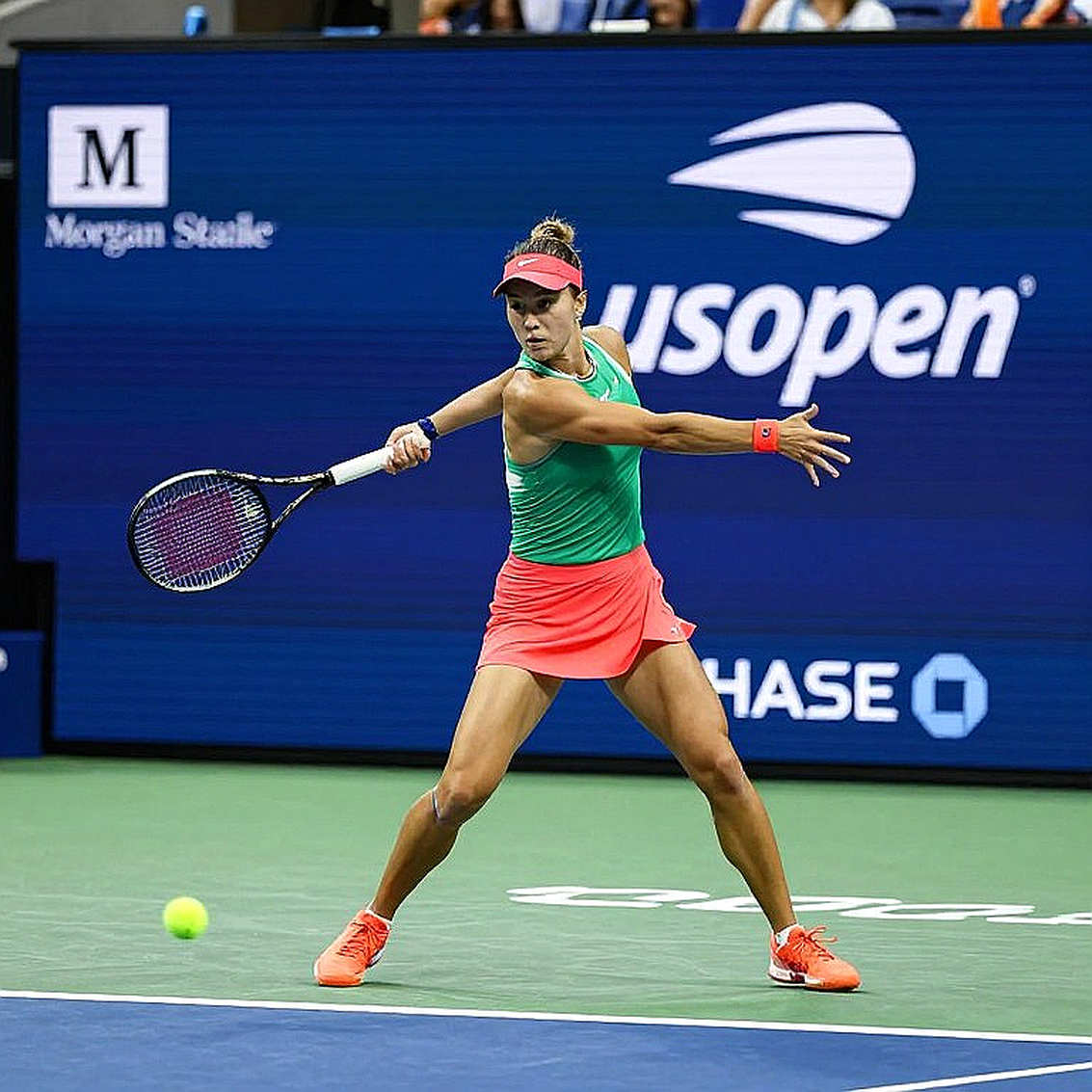
In a case lasting more than a year, fatigue is not a side effect. It is a medical variable. I built a competitive load-monitoring system for a young footballer in 2026, and the biggest lesson was not about minutes played. It was that the player featured in 51 matches in a season, and when that season ended with one more tournament, his average running distance fell from 11.2 km to 9.4 km per match. The body does not shout. It stays quiet and pays the bill in shrinking numbers.
In tennis, load is not measured in minutes the way football measures it. It is measured in serves hit, forehands rotated, hours on the practice court. In a dominant-arm injury lasting more than 12 months, every practice session is a re-test of the wound. Psychological fatigue at this stage does not slow bone healing, but it reduces adherence to a rehab protocol, and it raises the probability of returning too early. One premature return already happened in August 2026. The probability of a second does not shrink with time.
I don't need to see how many matches he wins. I need to see how many serves he hits in a practice session nobody records.
The burned window: age 24
This is the most important part, and the part every scoreboard ignores.
Draper is 24. On a tennis career curve, 23 to 27 is the prime. The body is at its peak, the experience is sufficient, and a career begins to accumulate Grand Slams. He already had a US Open semifinal and a Masters 1000 title before turning 24 — meaning he proved his ceiling before entering the prime. That is where every player wants to stand.
The 2026 season is erased. If 2027 is also eroded by a failed comeback, what is lost is not two seasons of competition. What is lost is two years of development in the age band where his generational peers are converting potential into titles. At the elite level, a one-year gap at 24 is not repayable. It only converts into pressure at 28.
The contrarian angle: the order of collapse and the real order
Here I need to argue against myself.
The easiest story to tell about Draper right now is the story of talent destroyed by injury. It comes with a ready-made template: Dominic Thiem, Juan Martín del Potro — players who suffered long-term wrist injuries and lost the peak of their careers. The original source even attaches a further-reading link about players whose careers were ruined by injuries, framing those names alongside Draper.
That is a narrative steering device, not an analysis. Putting three names in one headline does not create causation. It creates a visible pattern, and a visible pattern is what sells advertising.
Data never lies, but it took me ten years to learn when it is telling half the truth. Here, the half-truth lies in using two famous injury cases to forecast a third, when the three differ in injury location, injury mechanism, age, and most importantly the quality of the medical team — something the source does not mention once. My subject is Draper. And what I have says the opposite of the pessimistic template: a 24-year-old who has been No. 4, who has won a Masters 1000, sitting at the lowest base of his career, with a full season to prepare a return. Structurally, this is a position built to bounce, not a position built to keep falling. A ranking only records the past, in the slowest language it has.
But I will not swap seats for optimism either. The real risk here is not in the rankings. It is in what nobody can measure: the chronic nature of a bone bruise in the dominant arm, lasting over a year, described as complicated, having already broken one comeback in August 2026 after two events. A bone bruise is not a ligament tear, requires no surgery, and has no clear recovery timeline. It hurts, or it does not. And a player only knows whether it has healed at the moment he serves at full extension, on court, in front of a crowd, after the entry form is already signed.
That is why I read the start-of-2027 target as a soft marker. Early 2027 in the tennis calendar means the Australian swing — fast courts, the highest pressure of the season, and a schedule that allows no gradual build. If Draper's team is genuinely serious about the full-recovery standard he himself set, the Australian swing is the worst possible starting point in terms of load.
Takeaway: one recommendation, one signal for the next round
I have exactly one actionable recommendation for this case, and it belongs to scheduling, not to medicine.
Don't target the Australian Open. Target March.
Specifically: skip the entire Australian swing, warm-up events included, and place the first comeback at the February-to-March hard-court stretch — where Draper has zero points to defend, where British media pressure is far lower than at a Grand Slam, and where he can play three matches and rest instead of being locked into seven five-set matches in two weeks. For a player who needs to rebuild the count of serves hit at full extension under real match conditions, that is the only controllable way to load the body.
The ranking will not complain. It is so low that every win is net profit. Draper's opportunity does not lie in returning on schedule. It lies in returning in the right state, paying with a low-glamour month to reclaim the remaining three years of his prime.
A small discovery in the A-League in 2026 sounded like a whisper, but three years later it became a roar at the World Cup. I tracked Daniel Arzani through GPS numbers nobody bothered to open, and I learned that my job is to look where nobody is looking, one beat early. With Draper, that place is not the number 143 that British media will repeat all winter. It is the first practice session in January, with no crowd, no scoreboard, and only one person who knows whether the arm has healed: him, in the first serve at full extension.
The next round will not answer whether Draper returns — the statement already answered that. The next round will answer a narrower and much harder question: does he walk into March with a base of zero, or into January with an arm that still remembers the pain?